Brow decisions
Microblading vs. Microshading: What Changes?
One imitates separate hairs; the other builds soft density. The right choice depends on what the natural brow is missing and how the skin may hold pigment.
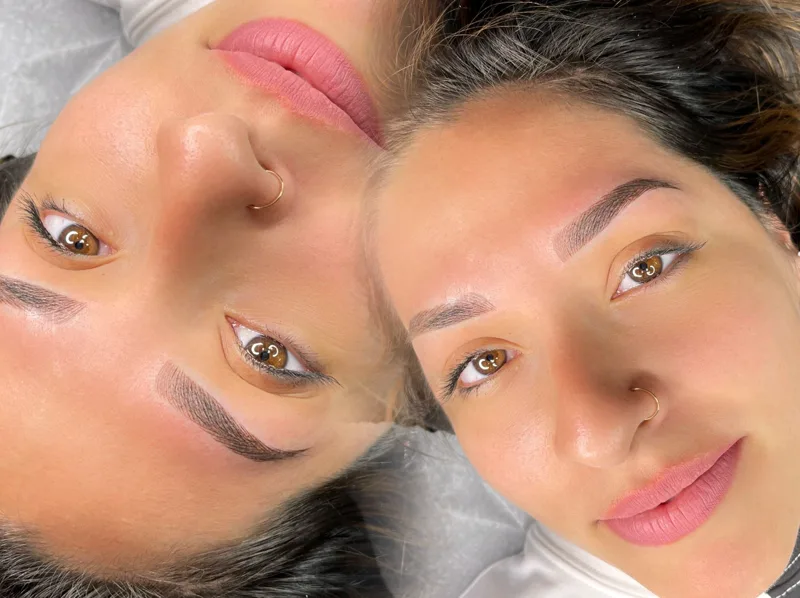
Microblading and microshading are often grouped together as eyebrow services, which makes them sound more similar than they are. Microblading draws hair-like strokes. Microshading places small deposits of pigment to build a soft powder effect. One is mainly about the illusion of individual hairs; the other is about even visual density.
The practical question is not which technique is “more natural.” It is which finish looks natural to you and makes sense for the brow hair, skin, and pigment already present.
What each technique is trying to reproduce
Microblading tries to reproduce the look of separate brow hairs. It can add visual structure in sparse areas while allowing skin to remain visible between strokes. The pattern has to follow the natural growth instead of looking stamped on top of it.
Microshading reproduces the effect of brow powder. The artist creates many small, controlled deposits rather than long simulated hairs. Density can be concentrated where the brow has gaps and softened toward the edges.
Both are cosmetic tattooing. “Semi-permanent” describes the expected fading, not a guarantee that pigment will disappear completely. The FDA notes that permanent makeup can be difficult to remove and may blur, fade, or change as the body and pigment age.
Side-by-side decision table
| Decision | Microblading | Microshading |
|---|---|---|
| Visible pattern | Separate hair-like strokes | Soft dots or pixels forming a powder effect |
| Best visual match | A brow that still has enough hair for strokes to blend | A brow that needs more consistent density |
| Makeup preference | Little or no filled-brow look | Soft pencil or powder look |
| Common skin conversation | Stroke crispness and retention | Evenness of healed shading |
| Fresh appearance | Darker, sharper strokes | Darker, more defined powder |
| Current studio price | Confirm at booking | Confirm at booking |
A table cannot evaluate active skin conditions, scar tissue, previous work, or medication. Those belong in a private consultation.
Oily skin is a factor, not an automatic answer
Fine strokes may spread or fade unevenly on some oilier skin. That is why microshading is frequently discussed as an alternative for oily or combination skin. Machine shading can create a more continuous healed effect even if individual strokes would not remain crisp.
Still, “oily skin equals microshading” is not a professional assessment. Oil level varies across the face and over time. Pore size, texture, inflammation, skincare ingredients, sun exposure, age, and healing history all matter. An artist needs to see the brow without makeup and ask about the products used around it.
A service should be postponed when the skin is irritated, injured, or otherwise unsuitable for tattooing. If a health condition or medication may affect candidacy, the artist may ask you to speak with a healthcare provider. That is a safety boundary, not a diagnosis.
Natural can mean hairs or softly filled brows
People sometimes reject microshading because they imagine a solid, dark block. That is a poor outcome, not the definition of the technique. Controlled shading can be very light. It can also be built more densely for someone who wears a polished brow every day.
Microblading can look delicate, but adding too many strokes can make a sparse brow visually crowded as pigment ages. More strokes are not always more realistic. Space matters because the design needs room to heal.
Use your ordinary routine as the reference. If you never fill your brows and want to preserve visible skin, start the discussion with strokes. If you draw the same outline every morning and dislike gaps, discuss shading. If your preference falls between them, compare Ombré Brows and ask how the artist uses density and gradients.
Where Ombré Brows fits in the vocabulary
Microshading usually describes how density is built: many small deposits form a powder effect instead of individual strokes. Ombré describes where that density changes: a lighter front transitions toward a more defined body and tail. In practical terms, an Ombré brow is a type of shading design.
Those labels are not standardized across every studio. One provider may call all machine powder work “Microshading.” Another may reserve “Ombré” for a pronounced gradient and use “Microshading” for softer, more even density or a combination with strokes. Dominican Permanent Makeup lists Microshading and Ombré Brows separately, but both service descriptions correctly involve machine shading.
Ask the artist to describe the proposed pixel pattern rather than relying on the menu name. Will the front remain visibly lighter? Will density be even through the body? Are any hair-like strokes part of the design? If two providers draw the same pattern under different labels, the names are not a meaningful difference.
Previous pigment is a design constraint, not another technique
Microblading needs visible separation between strokes. If an older brow tattoo leaves a dark or ashy background, new strokes may disappear into it. Shading may sometimes work with sufficiently faded pigment, but neither “Microshading” nor “Ombré” is a universal correction method.
Send makeup-free photographs that include the forehead, both brows, and close views in indirect daylight. Ask which part of the old outline or color would remain visible. The FDA notes that tattoo removal can require multiple treatments and complete removal without scarring may not be possible, so removal decisions belong with a qualified provider after individual assessment.
Make the artist explain the drawing, not just the label
During mapping, ask the artist to point to areas that will contain strokes, soft pixels, concentrated density, or no pigment. That conversation reveals more than a service name. A useful portfolio should also show healed edge softness, front density, and stroke spacing on different brows. Use the gallery to identify details you want explained.
Before booking, confirm the artist, proposed pattern, price, aftercare, and refinement policy. The artist page identifies Georgia DPH Body Artist Certification — Microblading, Artist IDs #2047 and #2049. Those public records verify the Microblading category only; confirm the credential scope applicable to the proposed technique independently.
If you can describe the planned marks and density without using the words Microblading, Microshading, or Ombré, you understand the decision. If the explanation depends entirely on the label, ask for a clearer drawing.
Sources consulted
Links reviewed for this edition. Medical and regulatory sources take precedence over general studio explanations.
Keep researching
Brow decisions
Microblading vs. Ombré Brows: A Practical Comparison
The better option depends less on trends and more on your skin, existing brow hair, preferred finish, and tolerance for future maintenance.
Healing and care
How Long Does Permanent Makeup Last?
Permanent makeup fades, but it has no universal expiration date. Technique, skin, sun, skincare, color, and previous work all change the timeline.
PMU education
How to Choose a PMU Course in Georgia
A participation certificate is not permission to practice. Start with Georgia's requirements, then compare what you will actually learn, practice, receive, and pay.