Brow decisions
Microblading vs. Ombré Brows: A Practical Comparison
The better option depends less on trends and more on your skin, existing brow hair, preferred finish, and tolerance for future maintenance.
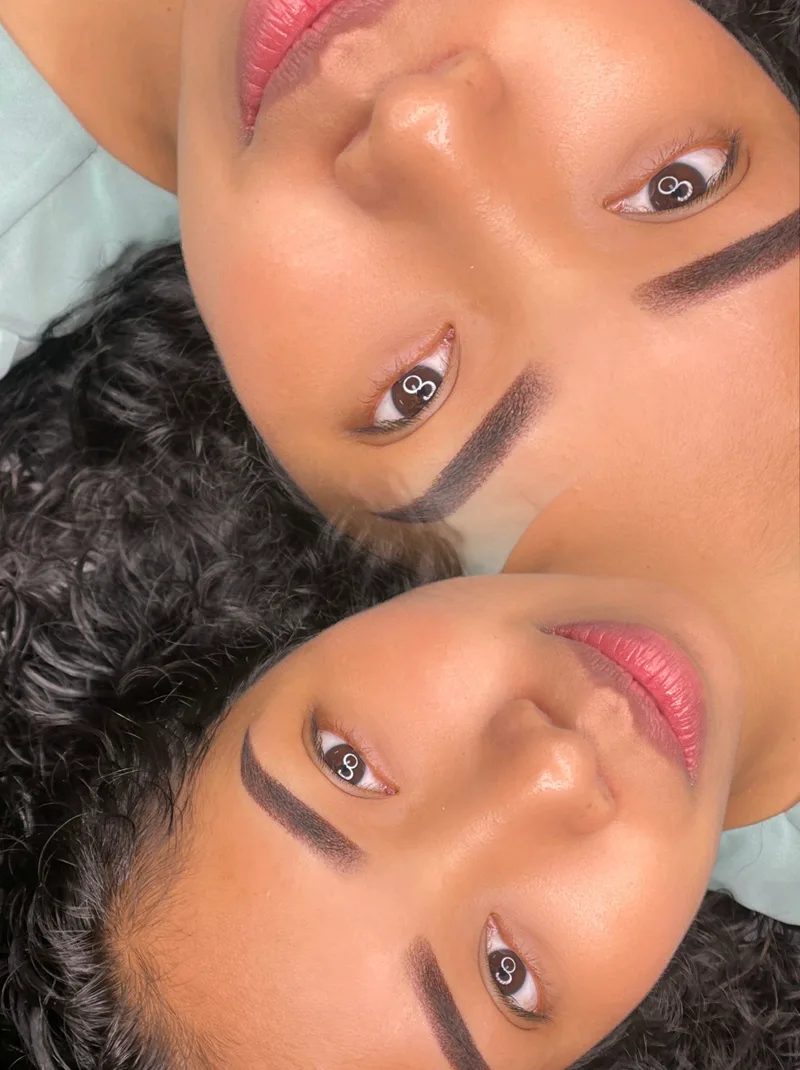
Microblading and Ombré Brows can both make sparse or uneven eyebrows look more complete, but they do it in visibly different ways. Microblading builds the design with individual hair-like strokes. Ombré Brows use machine shading to create a powder gradient, usually lighter at the front and more defined through the arch and tail.
That is the short answer. The useful answer requires looking at the result after healing, not just the fresh work shown in a social media reel.
Quick comparison
| Question | Microblading | Ombré Brows |
|---|---|---|
| Main visual effect | Individual strokes that imitate brow hairs | Soft, pixel-like powder shading |
| Typical finish | Airy and hair-like | Filled, graduated, and adjustable from soft to defined |
| Often considered for | Sparse brows and clients who want visible strokes | Clients who like a softly filled brow or need more even coverage |
| Skin discussion | Strokes may blur or retain less crisply on some oily skin | Machine shading is often considered for oily, combination, or mature skin |
| Current studio price | Confirm at booking | Confirm at booking |
| Refinement policy | Confirm need, timing, and price in writing | Confirm need, timing, and price in writing |
These are decision points, not guarantees. Skin condition, previous pigment, sun exposure, skincare, healing response, and the artist’s technique all influence the final result.
The biggest difference is the pattern placed in the brow
Microblading is designed around strokes. A good design does not simply draw parallel lines across the brow. Stroke direction, spacing, density, and placement need to work with the natural growth that is already there. The technique tends to make the most visual sense when enough natural hair remains to help the strokes blend.
Ombré Brows use controlled shading rather than simulated hairs. The artist can build a light front, add structure through the body, and finish with a more defined tail. “Powder” does not have to mean dark or blocky. Density can be planned for a subtle tint or a more polished makeup effect.
Neither technique creates actual hair. Both place pigment in the skin and fall under cosmetic tattooing. The FDA’s permanent makeup fact sheet is a useful reminder that removal can be difficult and that pigments may fade or change over time. A consultation should therefore focus on the healed design you can live with, not the darkest photo taken immediately after treatment.
Skin type matters, but it does not make the decision alone
You will often read that microblading is “for dry skin” and powder brows are “for oily skin.” That rule is too simple.
Oil production can affect how crisply some microbladed strokes heal. Large pores, active irritation, a compromised skin barrier, and the way a person heals also matter. Ombré shading may produce more even visual coverage in many oily or combination skin cases, but an artist still needs to evaluate the actual brow area.
The same caution applies to mature or very delicate skin. The right choice may involve lighter density, a machine-based technique, postponing the service, or declining it. A technique should never be selected from a skin label alone.
Decide how you want to look on an ordinary morning
Bring references, but describe what you like about them. “Natural” means different things to different people.
Microblading may fit if you want to see spaces between the strokes and prefer the impression of added hairs. Ombré Brows may fit if you normally fill your brows with pencil or powder and want a cleaner, more consistent shape. If you like visible strokes plus soft density, ask whether Microshading or another combination approach is appropriate rather than assuming one label covers every result.
Look at healed examples when available. Fresh pigment is darker and sharper. A useful portfolio should show more than one face, more than one skin tone, and results that resemble the finish you actually want. Our before-and-after gallery can help you identify a direction, but it does not replace an individual skin and brow assessment.
Healing is a process, not one final reveal
Both services normally look darker and more defined during the first few days. Dryness or light flaking can follow. Color may then appear lighter or temporarily uneven before it settles. Do not judge symmetry, softness, or retention from one day in that cycle.
Follow the written instructions supplied for your procedure. Do not pull at flaking skin to “clean up” the brow. Our permanent makeup aftercare page explains general care, while your appointment instructions should address your specific procedure.
Some redness, tenderness, and flaking can occur during normal tattoo healing. The American Academy of Dermatology advises seeking medical care when redness spreads or darkens instead of improving, pain worsens, pus or open sores appear, or fever and chills develop. The studio can answer procedure questions, but it cannot diagnose or treat an infection.
Longevity and future maintenance deserve equal weight
Our service guidance describes microblading as commonly lasting around 12 to 18 months and Ombré Brows often lasting one to three years. Those are planning ranges, not expiration dates. Pigment does not disappear on schedule. It softens at different rates based on skin, sun, skincare, color, technique, health factors, and aftercare.
A longer-lasting result is not automatically better. You should also consider how a shape and color will age and whether you are comfortable maintaining them. Repeated work must be evaluated on healed skin; adding pigment simply because a date has arrived can oversaturate an area that still has substantial color.
Previous brow pigment can change the answer
Old work is one of the main reasons an online comparison cannot choose for you. Faded pigment may still be too dark, too cool, too warm, or outside the shape you now want. Hair-like strokes cannot always be placed convincingly over a solid background. New shading cannot always correct an old shape.
Send clear, makeup-free photos in natural light before booking if you have previous cosmetic tattooing. The artist may recommend an in-person evaluation, a different technique, more fading time, or removal consultation elsewhere. Promising a cover-up without seeing the existing work is not responsible.
A consultation should end with an understandable plan
Before approving the design, you should know:
- Which technique is being recommended and why.
- How soft or defined the healed finish is intended to be.
- How the proposed shape works with your natural brow.
- Whether previous pigment limits the result.
- What the initial service and possible refinement cost.
- What would make the artist postpone or decline the procedure.
Confirm the current service price and any refinement policy directly in the booking channel before paying. The artist page identifies Georgia DPH Body Artist Certification — Microblading, Artist IDs #2047 and #2049; those public records verify the Microblading category only and do not establish authorization for every advertised technique.
Choose the technique after the mapping, skin review, and healed-result discussion make sense to you. If the explanation is only “this one is trending,” you still do not have enough information.
Sources consulted
Links reviewed for this edition. Medical and regulatory sources take precedence over general studio explanations.
Keep researching
Brow decisions
Microblading vs. Microshading: What Changes?
One imitates separate hairs; the other builds soft density. The right choice depends on what the natural brow is missing and how the skin may hold pigment.
Healing and care
How Long Does Permanent Makeup Last?
Permanent makeup fades, but it has no universal expiration date. Technique, skin, sun, skincare, color, and previous work all change the timeline.
PMU education
How to Choose a PMU Course in Georgia
A participation certificate is not permission to practice. Start with Georgia's requirements, then compare what you will actually learn, practice, receive, and pay.